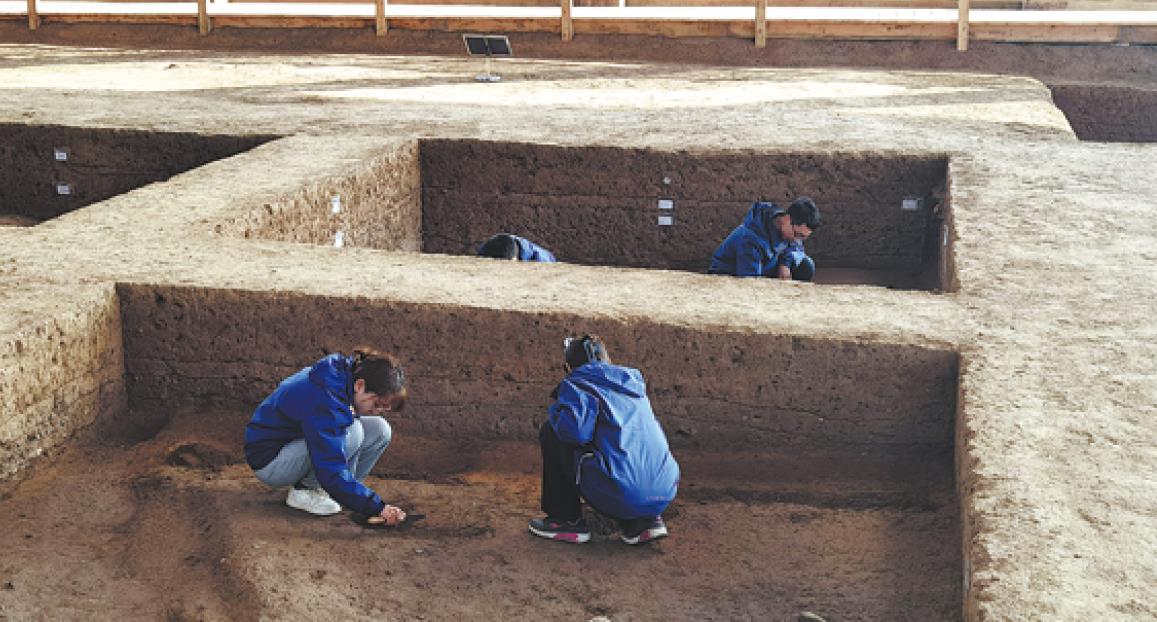
Yangshao Site
Introduction
The Yangshao Site, first discovered in Henan province in 1921, is a significant archaeological site recognized as the birthplace of modern Chinese archaeology. It provides invaluable insights into the Yangshao Culture, a Neolithic culture that thrived along the Yellow River in China. Its discovery marked a pivotal moment in uncovering the prehistoric civilizations of China and has since been crucial in understanding the cultural and societal development during the Neolithic period.
Historical Context
The Yangshao Culture is characterized by its unique painted pottery, which is significant in Chinese archaeology for distinguishing different cultural phases. The culture spans from approximately 5000 BC to 3000 BC, indicating a well-developed agrarian society that thrived in the middle reaches of the Yellow River basin. The Yangshao Site itself was excavated by Johan Gunnar Andersson, a Swedish geologist and archaeologist, who played a significant role in Chinese archaeology.
Archaeological Discoveries
At the Yangshao Site, archaeologists have uncovered a wide variety of artifacts that depict the daily life and cultural practices of the Yangshao people. These include pottery items, stone tools and architectural foundations of dwellings. The pottery is especially notable for its geometric and animal motifs, painted primarily in red and black. The discovery of these artifacts has greatly contributed to the understanding of Neolithic art, social structures and the economic practices of the time.
Cultural Significance
The Yangshao culture is renowned for its advancements in agriculture and its pottery craft. The society practiced slash-and-burn agriculture and is believed to have cultivated millet as a staple crop. The intricate designs and shapes of Yangshao pottery, such as bowls and jars, highlight the artistic skills of the people and suggest a rich cultural life. Moreover, the variety of ceramics found indicates a complex social system with trade networks that possibly extended beyond their immediate geographic area.
In recent years, discoveries at other sites such as the Dengcaogouliang in Zhangjiakou, Hebei province, have shown similarities with the Yangshao culture. Notably, architectural remnants and pottery from around 5,100 years ago at Dengcaogouliang resemble those from the latter period of the Yangshao culture. This comparison provides further evidence of cultural exchanges and interactions among different Neolithic communities across Northern China.
Modern Archaeological Importance
Today, the Yangshao Site continues to be a focal point for archaeological studies, offering a lens through which researchers can explore the origins and development of Chinese civilization. The site's findings not only highlight the ingenuity and adaptability of early agrarian societies but also contribute to the broader narrative of human cultural evolution. The ongoing research efforts at Yangshao and related sites underscore the importance of preserving and studying ancient heritage to understand the complex tapestry of human history.








